



Quick answer
Wood framing is the right choice for most low, ground-level decks with good drainage. It costs less and performs well when it’s built correctly. Steel makes more sense on elevated decks, long spans, sloped lots, lake and pool settings, and heavy loads like hot tubs, where fewer posts and a frame that won’t rot or warp justify the higher cost.
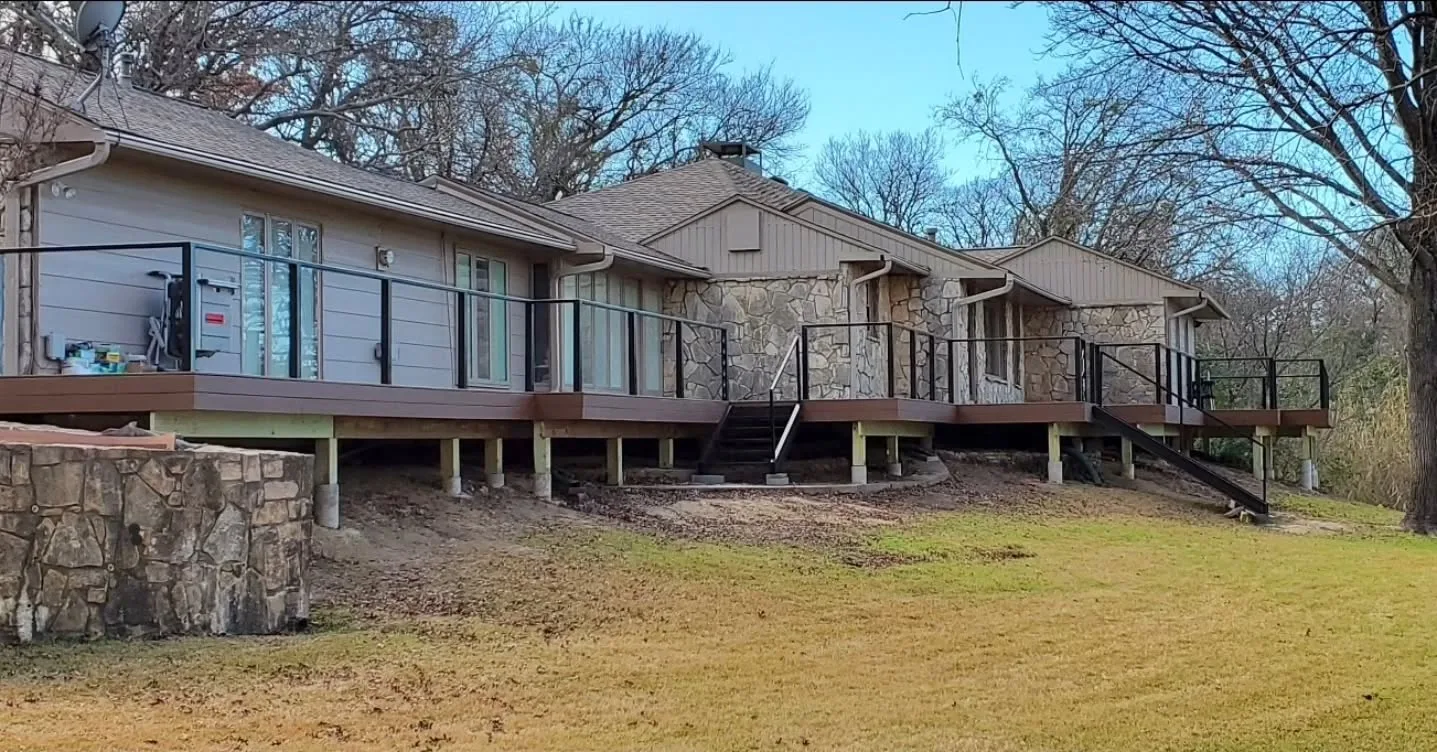
We get asked the same question on almost every deck bid: should the frame be wood or steel? After 20 years of building decks across Fort Worth, Benbrook, Weatherford and the rest of Tarrant, Parker, Johnson and Denton counties, our answer is that it depends on your lot. Not on which material is “better.”
A steel frame on a 16-inch-high patio deck is money you didn’t need to spend. A wood frame on a second-story deck over a slope is a frame you’ll be replacing while your composite boards still look new. This guide walks through how we decide, so you can walk into your own bid knowing which frame fits your yard.
On this page
Match the frame to the site, not the sales pitch
Neither material wins everywhere. The site decides: how high the deck sits, how far it spans, what the ground is doing underneath, and what you plan to put on top of it. Here’s how we usually call it.
Swipe sideways to see the full table.
| Your situation | Our usual pick | Why |
|---|---|---|
| Low deck (under about 30 inches) with good drainage | Wood | Short posts, easy footings, and the frame stays dry. Steel’s advantages don’t pay for themselves here. |
| Simple rectangle with short joist spans | Wood | Plenty of footing locations and no structural reason to upgrade. |
| Second-story or elevated deck | Steel | Fewer, taller posts and a frame that won’t twist or rot where it’s hardest to repair. |
| Long open span under the deck | Steel | Steel spans farther, so you get fewer posts and more usable space below. |
| Sloped lot or big grade changes | Steel | Fewer footings on a hillside, and posts that stay plumb. |
| Lake lot or poolside | Steel | Constant moisture is what rots wood framing first. |
| Hot tub or outdoor kitchen on the deck | Steel, engineered for the load | Concentrated weight needs a stiffer frame and properly sized footings. |
| Curves, cantilevers or a modern look | Steel | Steel can be bent and cantilevered in ways lumber can’t. |
| You want it to outlast the boards and the budget allows | Steel | Peace of mind is a valid reason. You can always choose steel. |
How wood and steel deck framing compare
Pressure-treated wood is the industry standard for a reason: it’s affordable, every crew can install it, and it’s easy to change later. Steel costs more and needs a crew experienced with steel, but it doesn’t rot, warp or feed termites, and it carries longer spans with fewer posts.
Swipe sideways to see the full table.
| Pressure-treated wood | Steel | |
|---|---|---|
| Typical frame life | 20+ years in our experience when it’s built right: the correct treatment rating, sealed cuts, and a frame kept off wet ground. Lumber makers back it with lifetime limited warranties against rot and termites, which replace boards but don’t promise a lifespan | Decades. Light-gauge systems carry 25-year limited manufacturer warranties |
| Rot and termites | Vulnerable, especially near the ground and around moisture | Immune. Termites and rot have nothing to work on |
| Flatness over time | Joists can crown, twist and shrink, which shows in the boards above | Stays straight, so the deck surface stays flat |
| Joist spans | Shorter spans, more beams and posts | Longer spans, fewer beams, posts and footings |
| Fire | Combustible | Non-combustible |
| Changes and repairs later | Easy to cut, sister or extend | Needs a crew with steel experience and the right tools |
| Upfront cost | Lowest | Higher, roughly 15% to 50% more depending on how it’s measured (see cost) |
No matter which frame you choose, one thing stays the same: what goes on top. Composite and PVC decking install on both, so the frame decision is about the site and how long you want the structure to last, not about the look of the surface.
The two kinds of steel deck framing
“Steel framing” covers two different things, and we build both.
Light-gauge galvanized systems. These are factory-made joists, beams and ledgers, cold-formed from galvanized sheet steel and coated for outdoor use. They go together much like a wood frame and work well on standard rectangular decks.
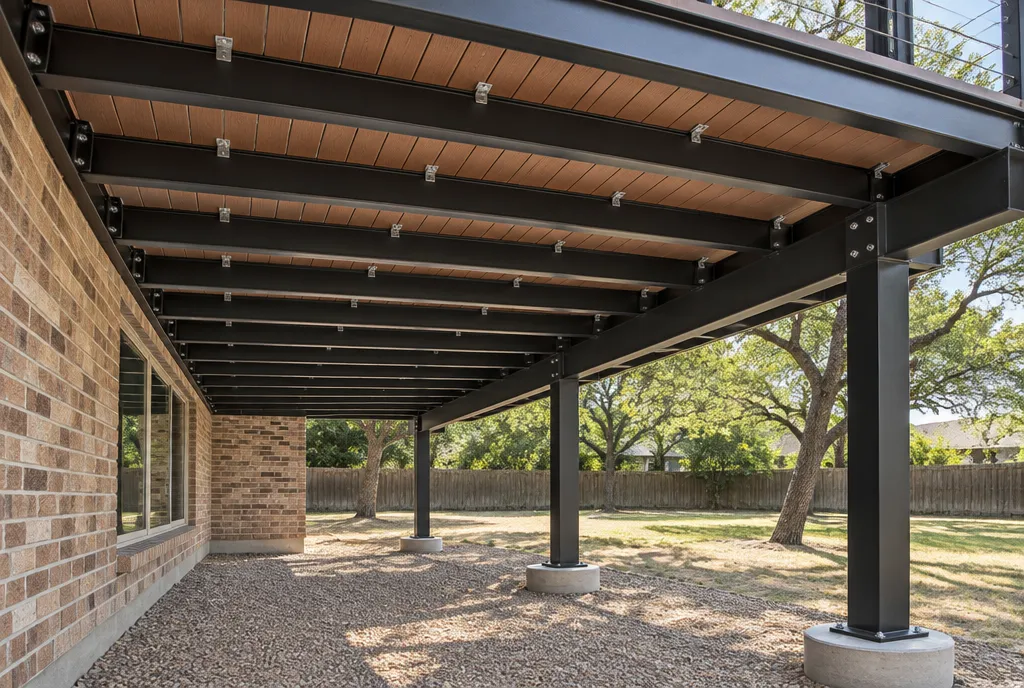
Custom tube steel. For elevated decks, long spans, odd shapes and heavy loads, we build the frame from structural steel tube sized to the job. That’s what you see under most of our steel decks: square posts on concrete piers, tube beams, and steel stair stringers, finished to match.
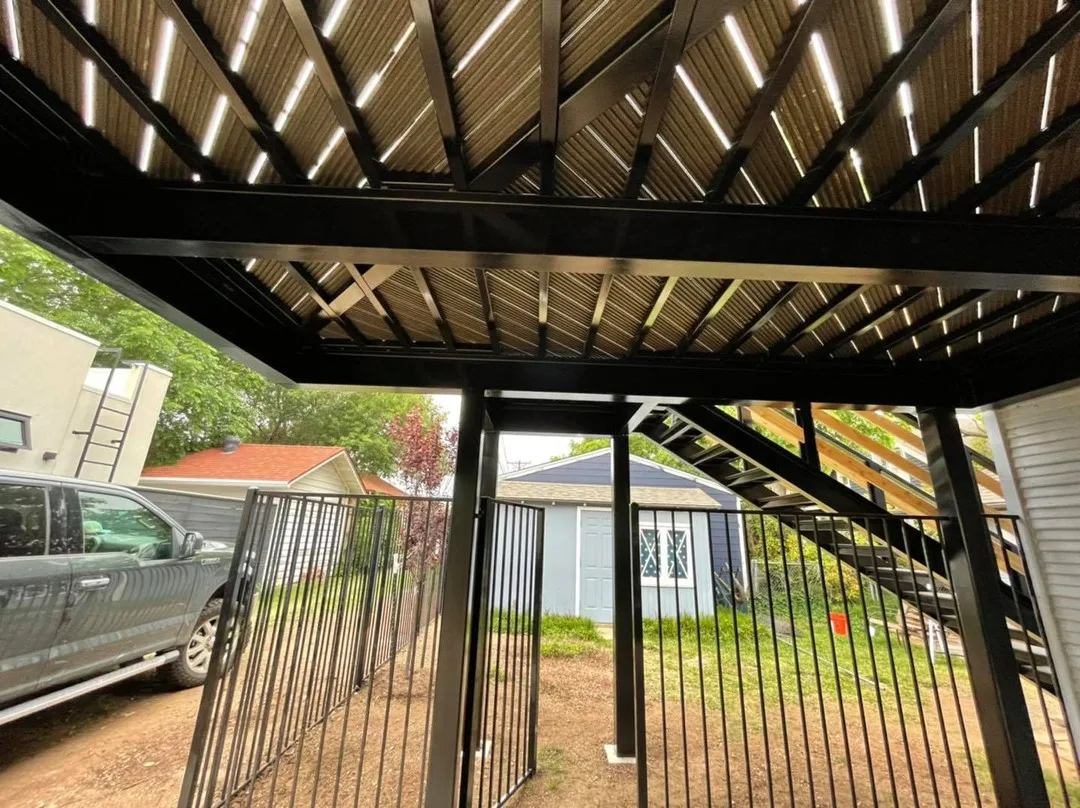
We don’t build to a brand. We size the steel to the deck. The gauge, wall thickness and member size come from the loads, the joist spans and the footing locations the site allows.
Welded on site or bolted together?
Most of our tube steel frames are cut and welded right on the job site. That’s the fastest route when the crew can work safely from the ground, a ladder or a lift on level ground.
Some sites don’t allow that. On lots with big grade changes, welding from a lift or a tall ladder is a real safety risk. On those jobs we weld the brackets in our shop first, then bolt the frame together on site. It adds a step, but it keeps the crew on solid footing and the connections consistent.
We decide which way to go during the site walk, based on access, height and grade.
When wood framing is the right call
If your deck sits low, the ground drains well and there’s no erosion, we’ll tell you to frame it in wood and save the money. That’s not a downgrade. A well-built wood frame on the right site will serve you for a long time, 20+ years.
Wood is usually the smart pick when:
- The deck is low to the ground. Short posts, easy footings, and nothing structurally demanding.
- The yard drains well. Wood framing fails from standing moisture, so a dry site removes its biggest weakness.
- The layout is simple. A rectangle with short joist spans has plenty of places to set footings.
- The budget is better spent up top. The money you save on the frame can go toward better decking, railing or a shade structure you’ll see every day.
Built right is what matters. That means footings deep enough for North Texas clay, a properly flashed and bolted ledger, joist tape over the tops of the joists, and correct spacing for the decking you choose. Our custom deck framing services cover both wood and steel, so we’ll recommend the one your site actually needs.
When steel framing makes more sense
Steel earns its cost when the site is working against a wood frame. These are the situations where we recommend it.
Elevated and second-story decks
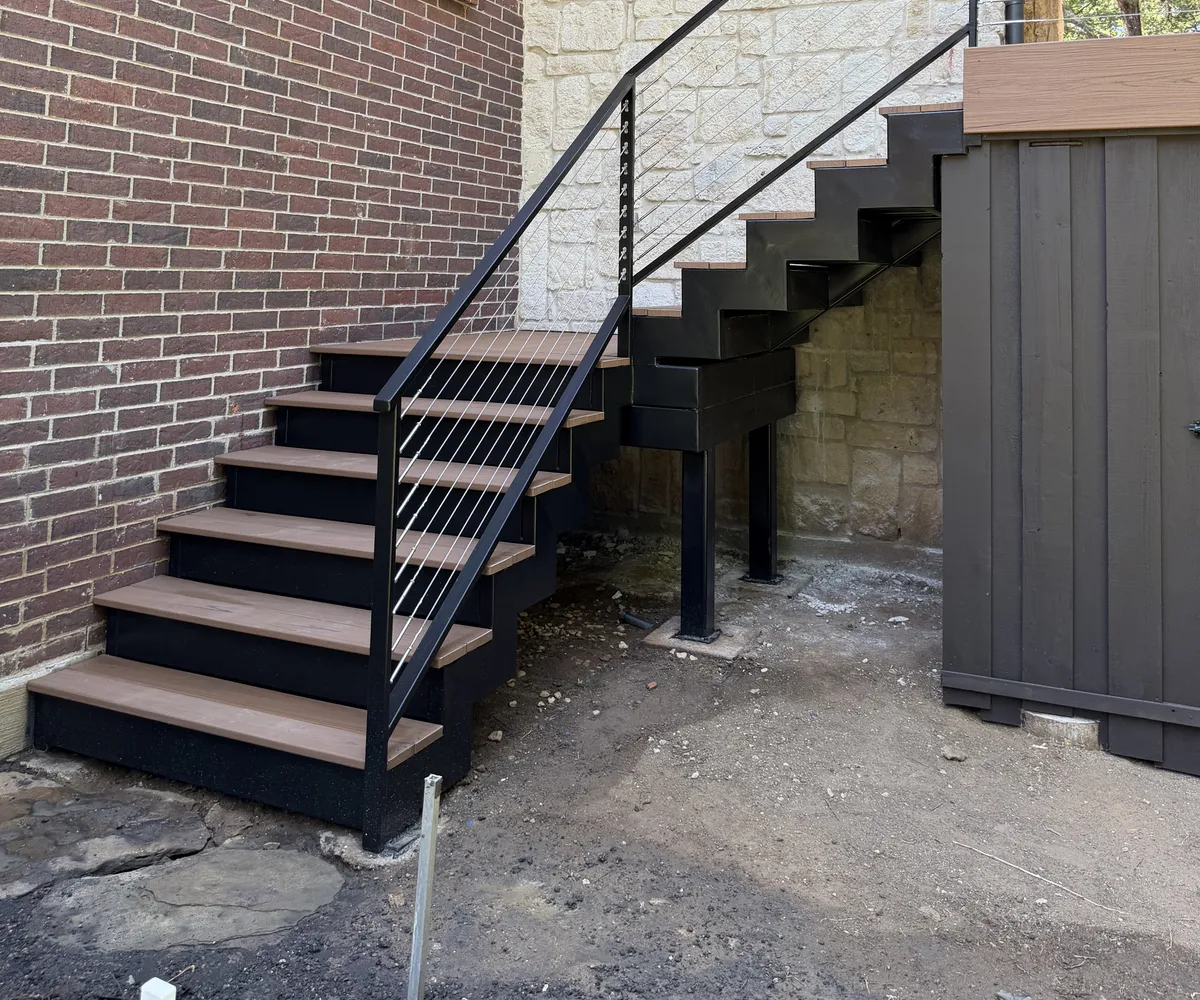
The higher the deck, the more the frame matters and the harder it is to repair. A steel frame stays straight, and steel posts carry more load per post, so a tall deck needs fewer of them. It also keeps a clean, open look from the yard below.
Long spans and fewer posts
Steel joists and beams span farther than lumber of the same depth, so the deck needs fewer posts and fewer footings. That means more usable, open space under the deck for a patio, storage or parking.
Sloped lots and grade changes
On a hillside every footing is more work, and some spots are hard to reach at all. Steel lets us put fewer footings where the ground allows and run longer spans between them. Steel posts also hold plumb without twisting as they dry, which matters on the tall posts a slope demands.
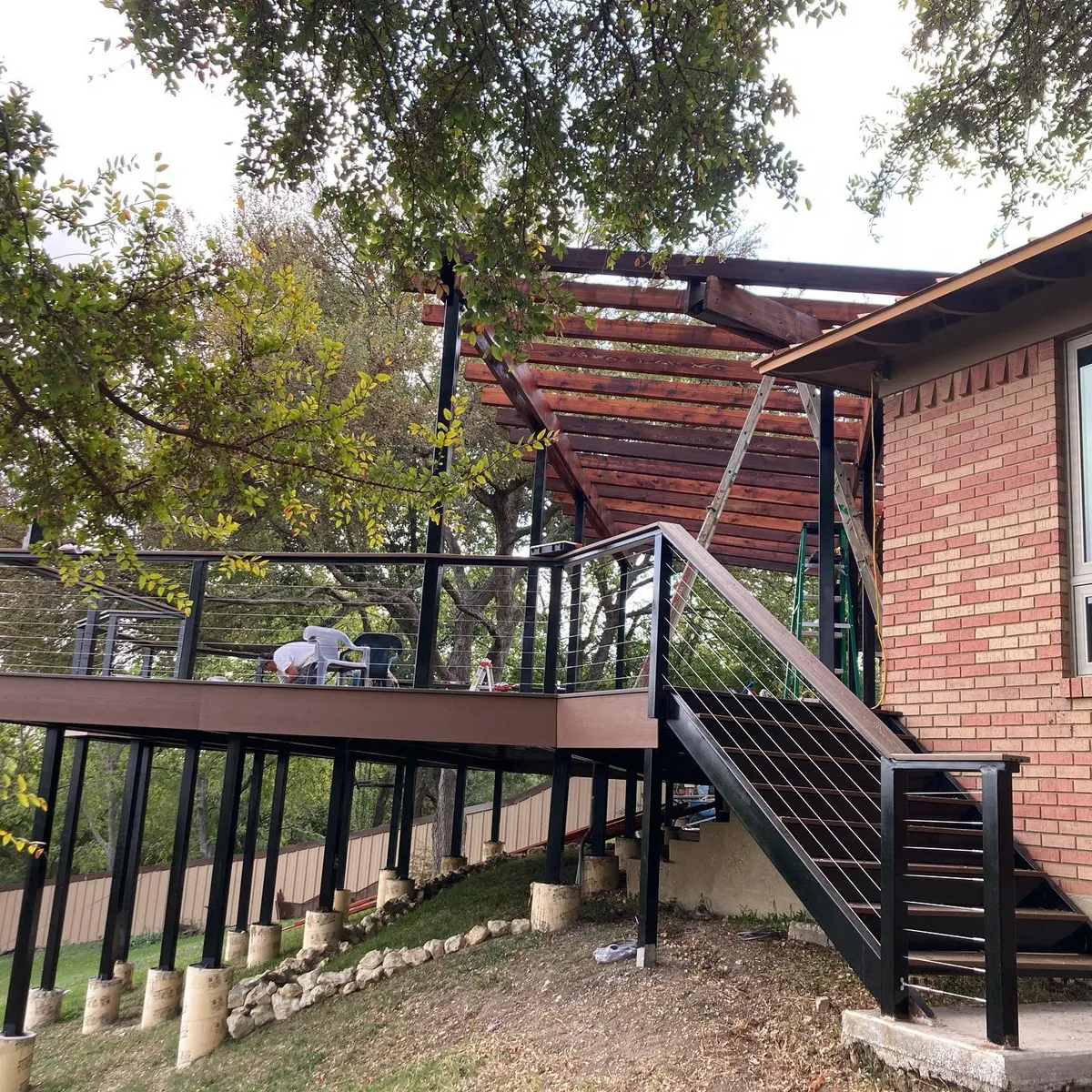
Lake lots, poolside and constant moisture
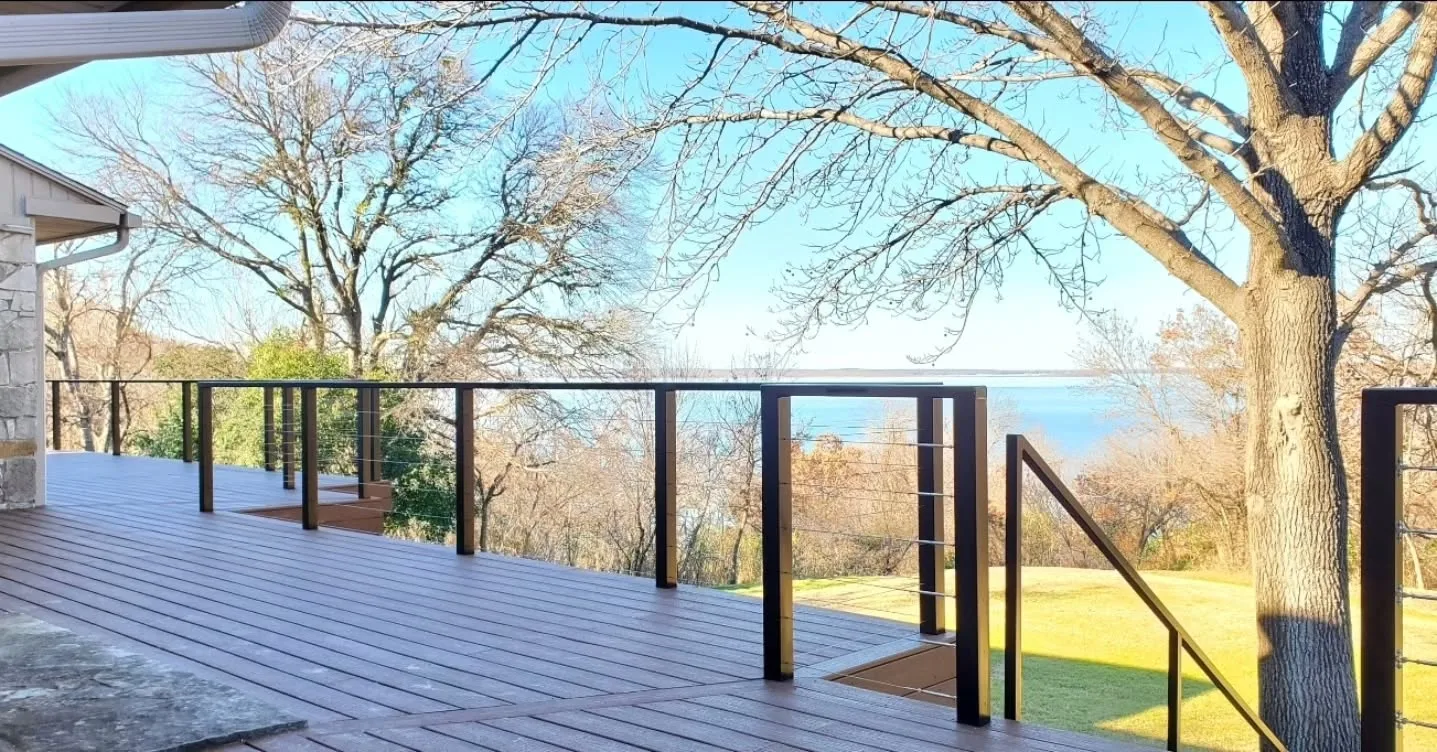
Moisture is what breaks down wood framing first. Decks by Eagle Mountain Lake, Lake Benbrook or a backyard pool see splash, humidity and wet ground year after year. Steel doesn’t rot, so the frame isn’t fighting the setting.
Hot tubs, outdoor kitchens and heavy loads
A filled hot tub puts a lot of concentrated weight on a small area of the deck. Steel lets us engineer a stiffer frame under that weight, with footings sized for it. The same goes for stone outdoor kitchens and heavy planters. Wood is still an option when the load is lower to the ground and we can shore up the framing with additional footers and blocking. When a heavy, concentrated load calls for robust framing, though, steel often comes in at a similar or lower price, because it takes less steel than wood to carry the same load.
Curves, cantilevers and modern designs
Steel can cantilever farther and be shaped in ways lumber can’t. If your design has a floating edge, curved front or a clean modern profile, steel makes it possible.
Peace of mind
Some homeowners just want a frame that will outlast the composite boards on top of it, so they never tear up a good surface to fix the structure underneath. If that’s you and the budget allows, steel is a fine choice on any deck.
What steel deck framing costs compared to wood
Steel framing usually costs more than wood upfront. Published industry estimates put the premium anywhere from about 15% to 50%, and the spread comes from what’s being measured:
- Whole deck: steel adds roughly 15% to 30% to the total project, according to one builder’s estimate (Pocatko Builders).
- Frame only: steel framing runs roughly 20% to 50% more than a comparable wood frame, depending on the source (Legacy Decks, Heartland Decks).
Steel material costs more per foot, but steel spans farther, so a steel frame often uses fewer posts, fewer beams and fewer footings than a wood frame of the same size. In DFW clay, where every footing is a deep hole and concrete, that matters. Labor can shrink too. In a side-by-side build commissioned by a steel framing manufacturer, the steel frame took 34% fewer labor hours than an identical wood frame (Fortress Building Products).
The result: on a low, simple deck, steel will cost noticeably more. On an elevated deck, a long span or a sloped lot, the gap narrows because the steel design needs less structure to do the same job.
Why we don't publish a price list
Steel prices have been moving fast, with tariffs and supply swings changing material costs within a matter of months. Through 2026, our suppliers have raised prices by about 7% every 60 to 120 days on average. A number we post today could be wrong by spring. Instead, we engineer each frame to your site and quote it against current material prices, so the number you get is the number we build to.
How we engineer a steel deck frame
Every steel frame we build starts with the loads, not a catalog. Here’s how we design one:
- The loads. People, furniture, a hot tub, a stone kitchen, planters. Heavier and more concentrated loads need stiffer members and closer support.
- The spans. How far the joists and beams need to run between supports, and how much open space you want under the deck.
- The footing allowances. Where the site actually lets us put footings, and how deep they need to go. On slopes, near pools or along lake banks, this often decides the whole layout.
- The steel size. Only after those three do we pick gauge, wall thickness and member size. That’s why we don’t sell steel by brand. We size it to the deck.
- The connections. Field welded or shop-welded brackets bolted on site, decided by access, height and safety.
- Corrosion protection. Steel is coated to resist rust, and any cut or weld breaks that coating. We treat every cut and weld with a rust-inhibiting coating before the decking goes down.
Permits and inspections apply to steel decks the same as wood.
Steel doesn't fix DFW clay. Footings do.
You may hear that steel framing “handles clay soil.” That’s only half true. North Texas sits on expansive black clay that swells when it’s wet and shrinks when it dries, enough to move shallow footings from season to season (Constructly Dallas deck cost guide).
If a footing moves, the frame on top moves with it, whether it’s wood or steel. What protects a deck from clay is footing depth, drainage and good grading, not the frame material.
Where steel helps is in two ways. It needs fewer footings, so there are fewer places for soil movement to cause trouble. And a steel frame won’t add its own movement on top of the ground’s, because it doesn’t shrink, twist or crown as it dries the way lumber can.
Frequently asked questions
Is steel deck framing worth the extra cost?
On elevated decks, long spans, sloped lots, lake and pool settings, and decks carrying hot tubs, usually yes. On a low deck with good drainage, usually no. Wood will do the job for less there.
How much more does steel deck framing cost than wood?
Industry estimates range from about 15% more for the whole deck to 50% more for the frame alone. The gap shrinks on decks where steel’s longer spans cut the number of posts and footings. Because steel prices move quickly, we quote every frame against current material costs.
How long does wood deck framing last in Texas?
In our experience, a well-built pressure-treated frame lasts 20 years or more. Treated lumber makers back structural lumber like joists and beams with lifetime limited warranties against rot and termites, but those warranties replace the wood, not the labor, and they’re voided if above-ground lumber is used near the ground. What actually decides the lifespan is how it’s built: ground-contact rated lumber for joists within 6 inches of the ground, every field cut and drilled hole treated, and a frame that stays dry and off wet soil. Elevated, well-drained frames last longest. Decks near pools, lakes or wet ground are the first to need frame repairs.
Can you put composite or PVC decking on steel framing?
Yes. Composite and PVC decking options install on steel joists using fasteners or hidden clips rated for steel. Pairing long-life boards with a long-life frame means the structure lasts as long as the surface.
Does steel deck framing rust?
Steel framing is coated to resist rust. Light-gauge systems are galvanized and coated at the factory, and we treat every field cut and weld on custom frames before the decking goes on. Damaged coatings are the main rust risk, so installation matters.
Can steel joists span farther than wood?
Yes. Steel spans farther than lumber of the same depth, which is why a steel deck usually needs fewer beams, posts and footings.
What is the best deck framing for a hot tub?
A frame engineered for the hot tub’s full weight with water and people in it. On elevated decks we typically recommend steel for that load. On ground-level decks, a reinforced wood frame with added footings and blocking can also work.
Is steel framing worth it on a low, ground-level deck?
Usually not. If the deck sits low and the ground drains well, we recommend wood and putting the savings toward decking or shade. If you want steel for peace of mind and the budget allows, we’ll build it.
Not sure which frame fits your yard?
Josh walks every site himself and will tell you straight whether your deck needs steel or whether wood will do the job.
Sources
- Pocatko Builders: Why Steel Deck Framing Is Worth the Upgrade
- Legacy Decks: Wood vs. Alternative Framing
- Heartland Decks: Steel vs. Wood Deck Frames
- Fortress Building Products: Steel vs Wood Deck Framing Project Cost Comparison
- Constructly: How Much Does a Deck Cost in Dallas?
- Viance: Preserve CA Lifetime Limited Warranty
- Southern Forest Products Association: Pressure-Treated Southern Pine
- USDA Forest Service: Long-Term Durability of Pressure-Treated Wood in a Severe Test Site (2013)